Remember this?
 Remember now it was from my Whimseybox for August? And remember how I didn’t even get started on it until October? And now it is November? Yea, even the end of November? Yup.
Anyway, I finally did get back to working on this project. I think it turned out a bit more successfully. I found this helpful video on YouTube via the DecoArt site.
If you don’t want to watch the whole thing, she mentions toward the end that you have to press pretty firmly on the iron to transfer the color. So that’s what I did. And here’s my result.
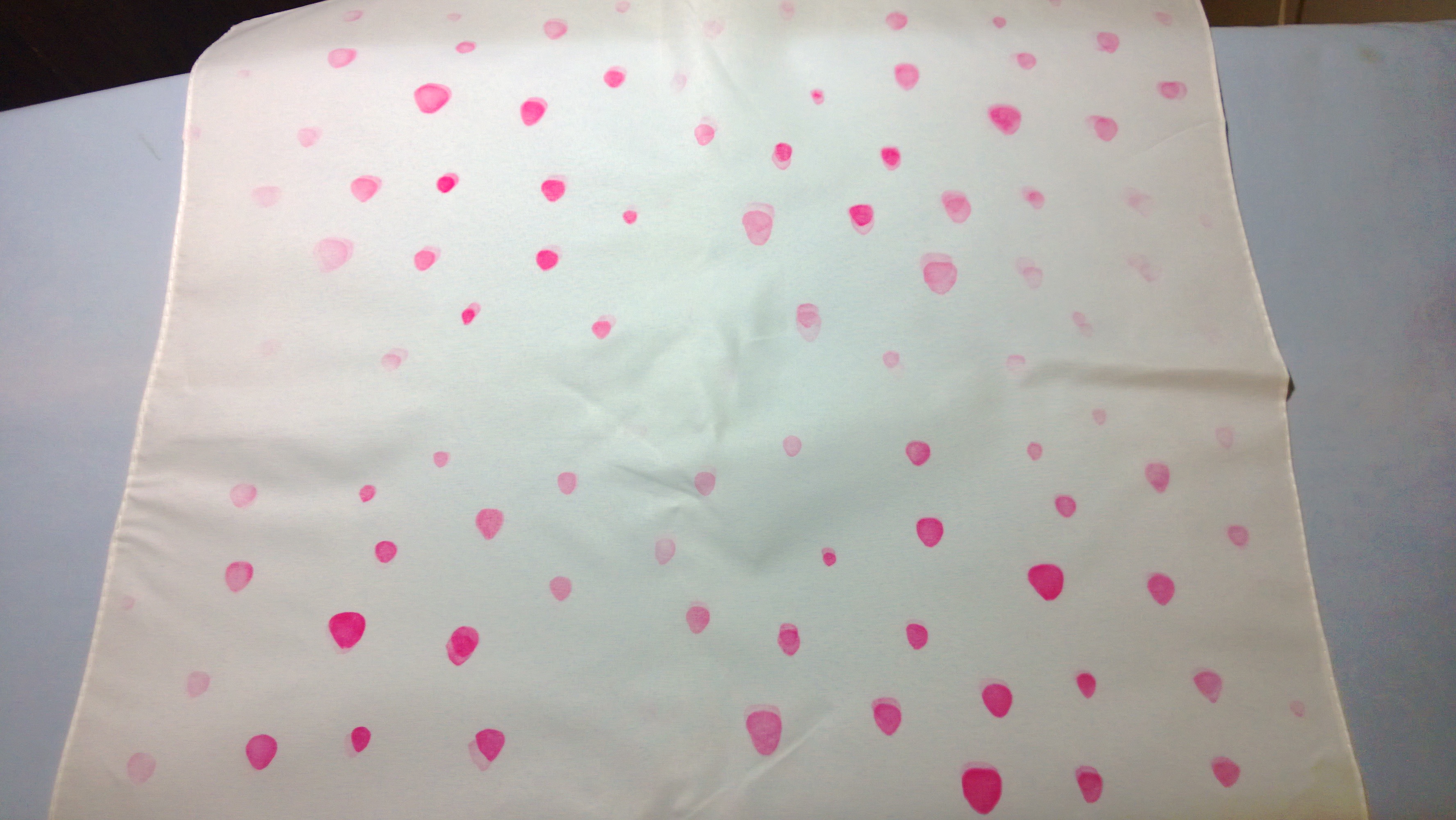 It turned out better. I got the hang of it as I did more sections. The upper right quadrant is still kind of faint. And there’s a small issue of ghost strawberries. Oh well, it doesn’t bother me as much as I thought it would. Maybe the idea of ghost strawberries is just too funny to me. But if you don’t want ghost images, obviously don’t transfer onto an area more than once because odds are overwhelmingly that you won’t line everything up the same way and you’ll get ghost images. Just press firmly the first time around and move the iron slowly across the area. I found that it worked better than trying to cover the whole sheet of paper at the same time. Spend about 30s over each iron sized area of the paper and the images transfer a lot nicer. A had a few strawberries that even showed the pin hole seeds that I painstakingly poked into each strawberry.
Anyway, the other thing they had mentioned in the video is that the color of the ink in the bottle can be vastly different from what you see after it’s transferred. Here are some photos to poorly illustrate that fact.
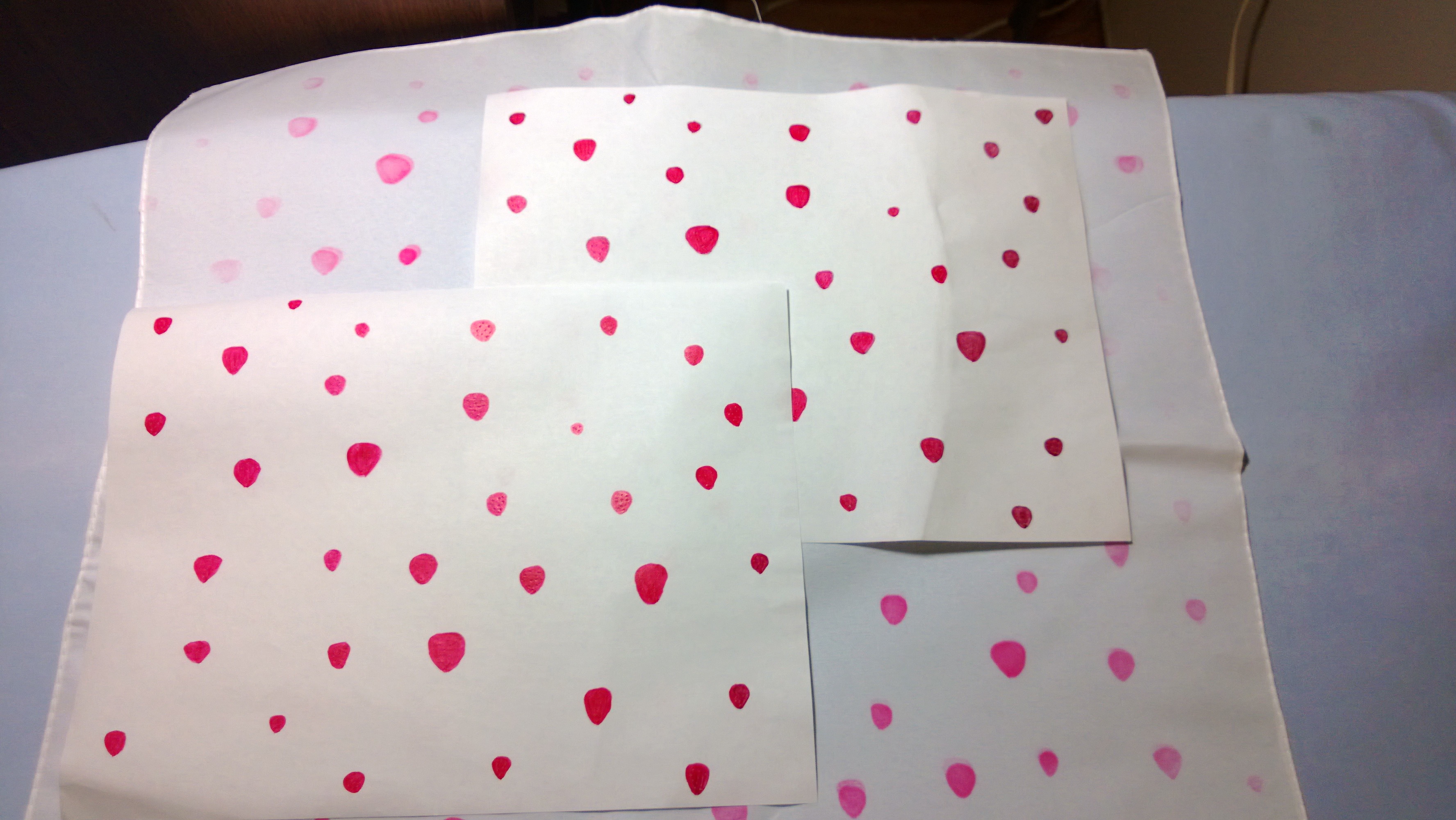

And here are the strawberries (and ghost strawberries…and some of them look like raddishes and ghost raddishes) with their green tops. Since I didn’t have any green ink, I just used a fabric marker.

Hopefully, I’ll have this whole thing finished up before another month passes by…


 Random moosages as I see fit.