Skip navigation

Category Archives: crafting

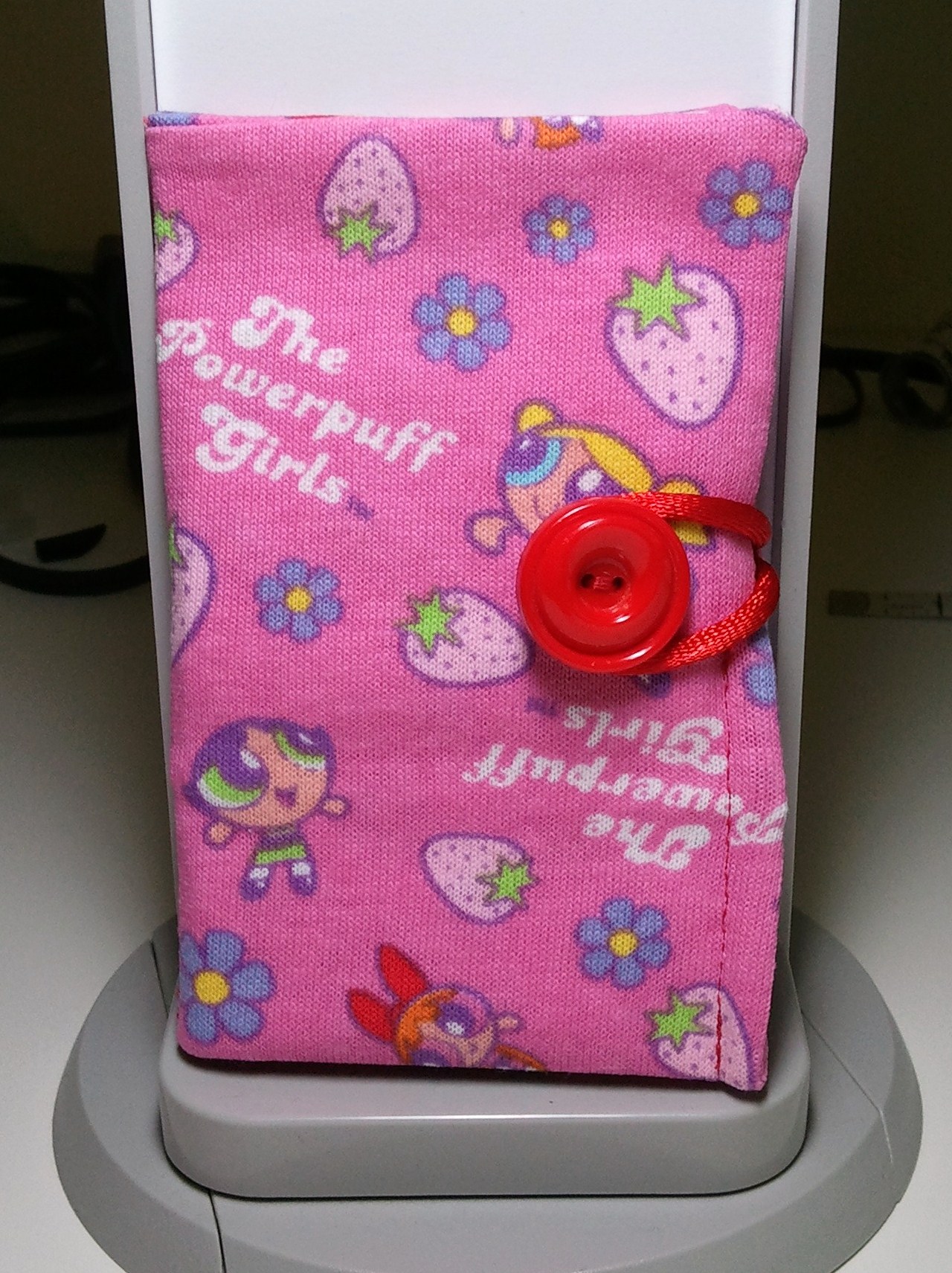
A very loud tea wallet.

Ta da!  It’s time for a craft!  I made this tea wallet a few weeks ago for a swap on Swap-bot, in which you make a tea wallet, similar to what you see above, and send your partner some tea along with it.  Well, I thought this would be an excellent time to use all this Powerpuff Girls cloth that someone had given to me while I was in college…because they felt that I could find some use for it?  I didn’t even sew back then.  I don’t know why they thought I would be a good candidate for this cloth.  I also don’t like pink.  All around strange.  But anyway, I’ve had it in my pile of scrap cloth this whole time and I’ve finally found away to get rid of some of it!  Huzzah!

Also, I thought a tea wallet is an interesting idea and useful if you’re a big tea drinker (I am probably a moderate tea drinker).  Now you can cart your favorite teas around without them getting all squished in your bag and whatnot.

To make the tea wallet, I modified what I found in this tutorial by Red Linc Crafts for less sewing and less material.

Materials:

PPG!

  • 11″ x 6.5″ piece of cloth (this will be the base)
  • 4.5″ x 6.5″ piece of cloth (this will be the pocket)
  • 3″ of ribbon or cord (I used Chinese knotting string because I have an overabundance of it)
  • a largish button
  • the zipper foot to your sewing machine (optional)

Procedure:

  1. Fold the 4.5″ x 6.5″ piece of cloth in half endwise with the right sides facing together and sew along the bottom edge.  I allowed for 1/4″ seam.  Flip the tube inside out and iron it flat.
  2. Place the tube on your base cloth about 1.5″ from the top edge with the right sides facing together.  Pin and sew across the bottom edge of the pocket.  I allowed for about a 1/4″ seam again.
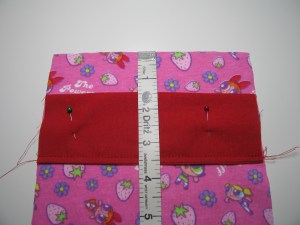
  3. Cut about 3″ of your ribbon (or whatever) and pin a loop facing inward on the right side of the base cloth, about midway on the pocket. I forgot to get a picture of this, but you can see where I put the loop in the finished product.
  4. Fold the base cloth in half lengthwise with the right sides facing together and pin.  Sew around the edges, but make sure to leave the last 2″ open so you can flip it inside out.  I allowed for a 1/8″ seam this time.  This cloth doesn’t really fray.  If you’re using cloth with a loose weave and will fray, you may still want to use a 1/4″ seam.  There should still be plenty of room for the teabags with the larger seam allowance.
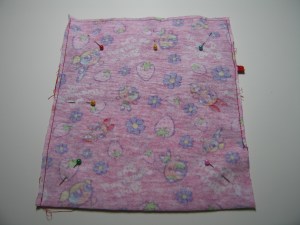
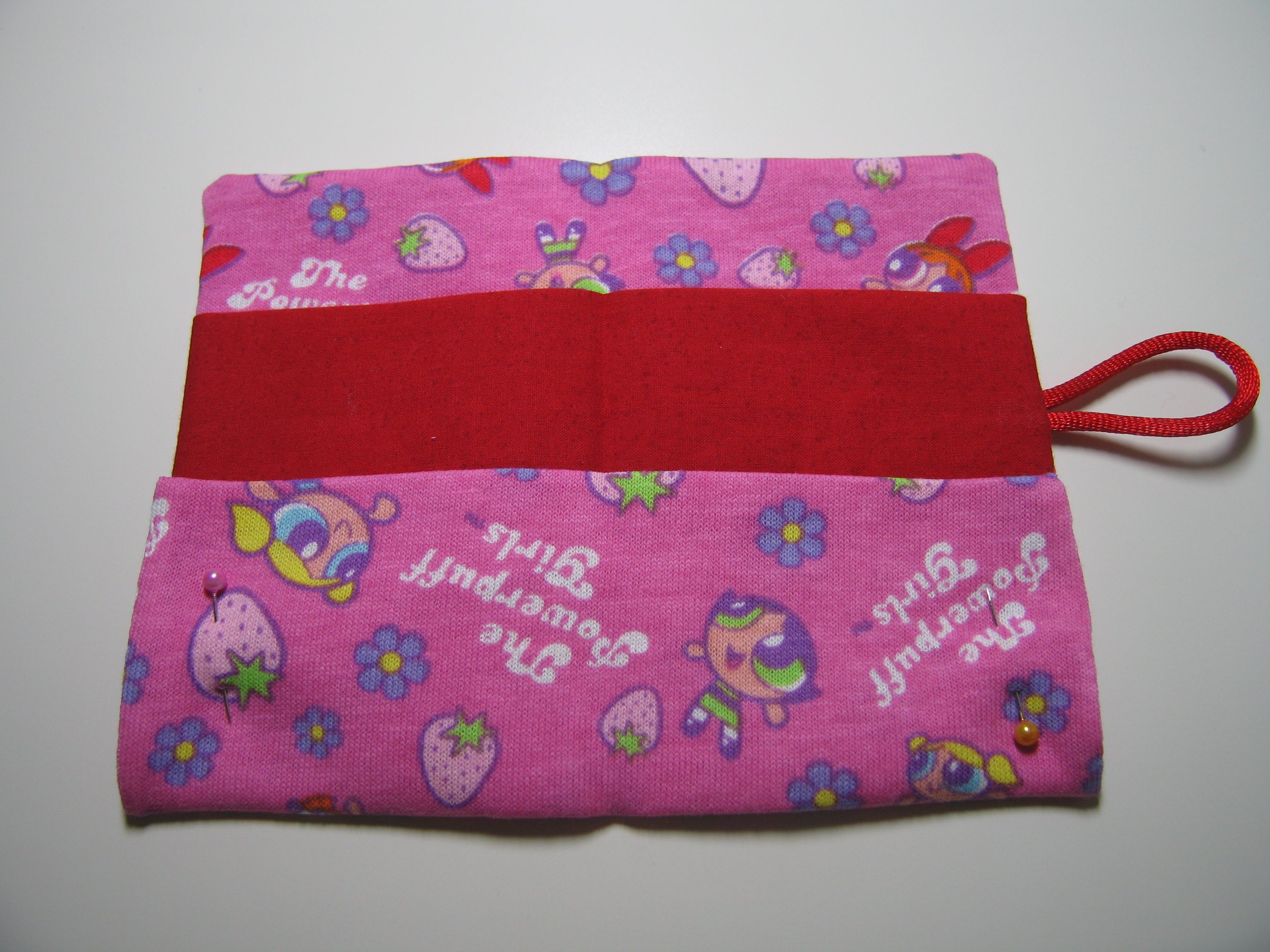
    You can see the stub of where my string is pinned in this picture.

  5. Flip and iron.  If you used a larger seam allowance, you may want to snip the top corners of the wallet so that you don’t get a bulge there from the excess cloth.  When ironing, iron the open edges inside as if they were sewn in.  It’ll be taken care of with the bottom pocket.
  6. Fold about 2″ of the bottom edge up, pin, and sew down the edges.  I didn’t use the zipper foot here and I kind of regret that.  With a zipper foot, you can get much closer to the edge of the wallet and the seams would have looked neater.  I used the zipper foot previously here.   If you’re hand sewing, I guess it doesn’t really matter.  However, when you’re sewing, make sure those open edges are tucked in and are getting sewn down.
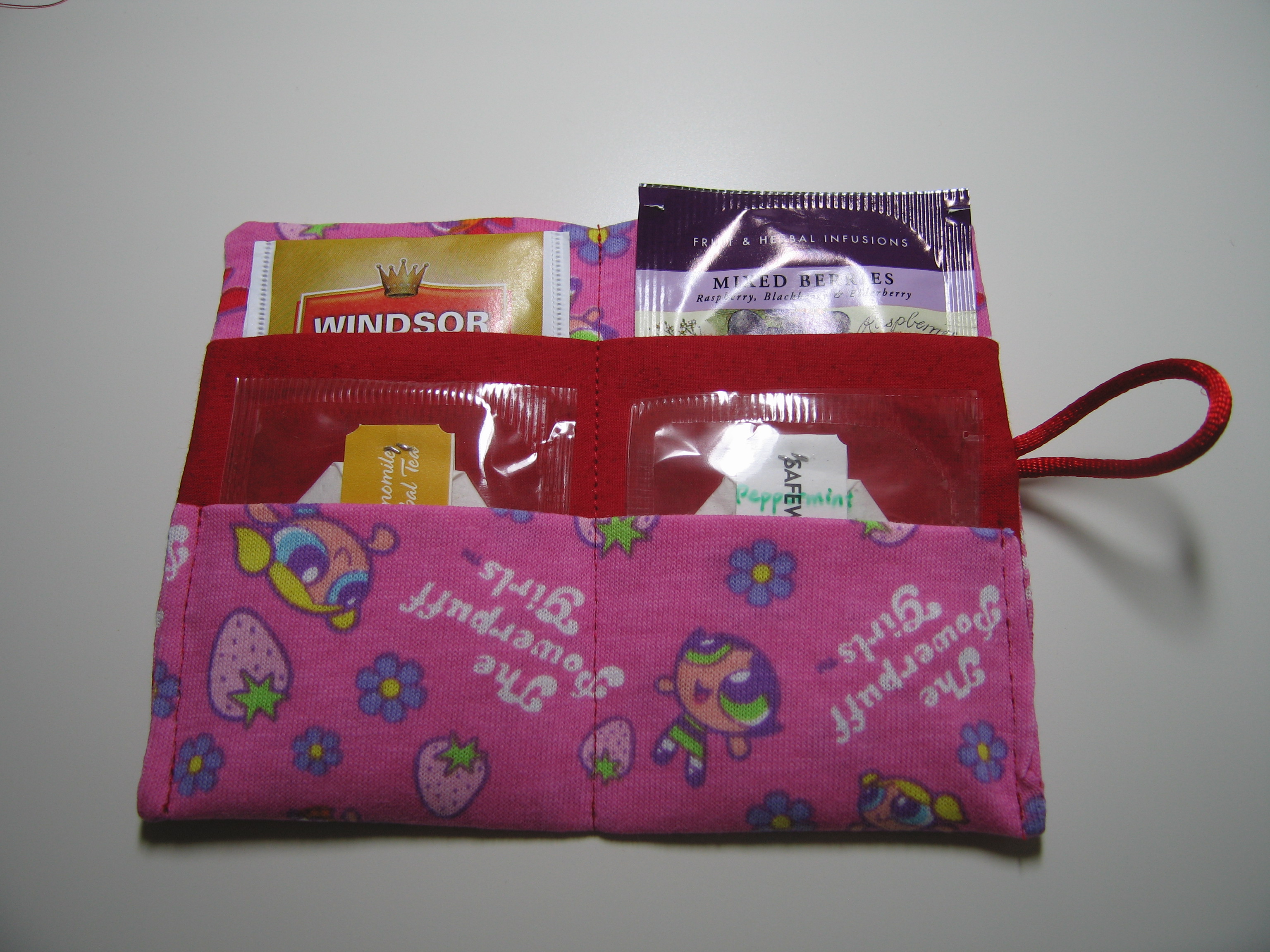
  7. Fold the wallet in half and iron a good crease into the center to use as a guide to sew the center line.  Now you have four pockets!  And you didn’t have to bother drawing a center line and making sure it was covered by the thread.  Huzzah!  You can see in the picture above where that crease is.
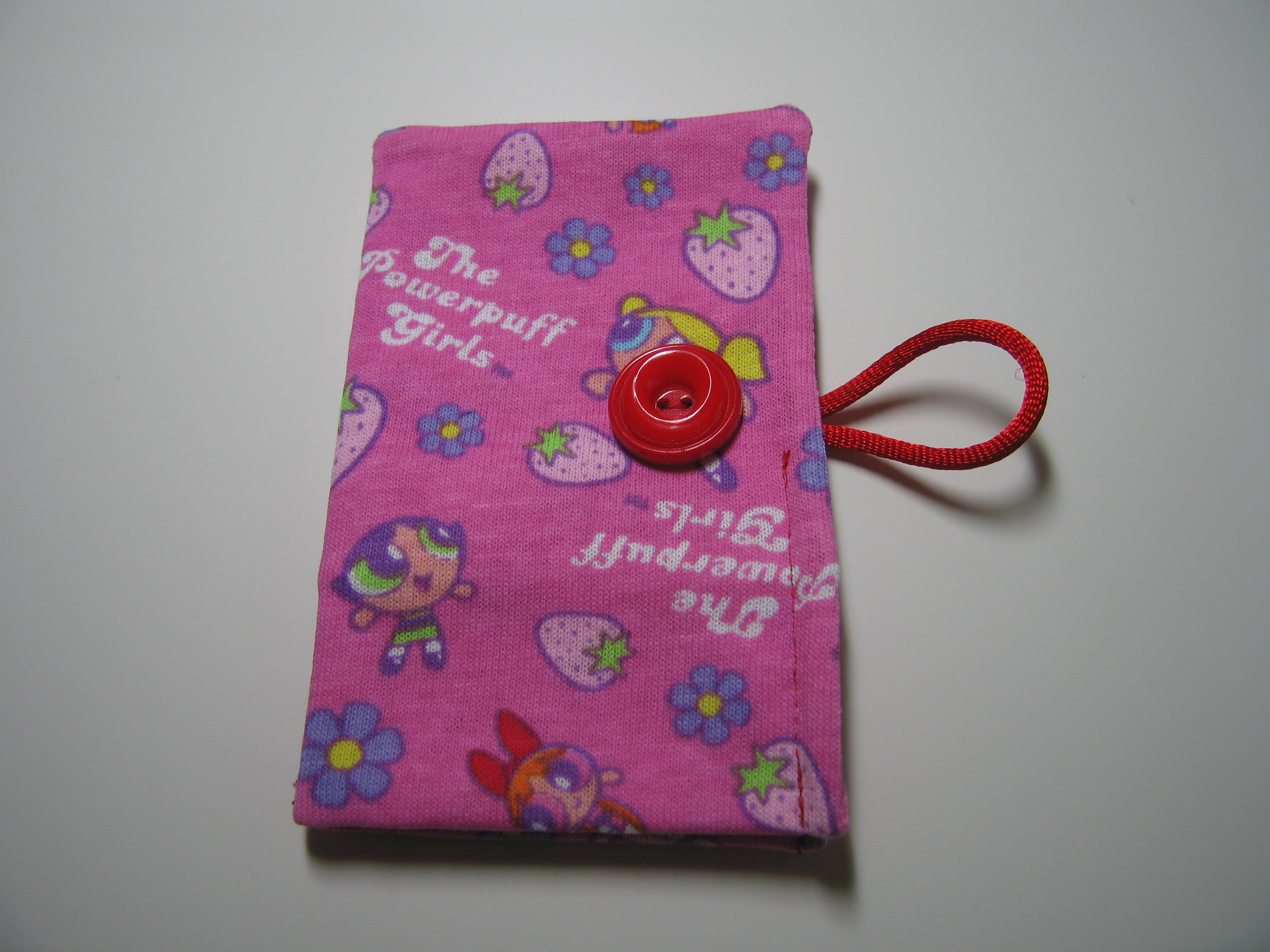
  8. Fold the wallet in half again, place the button and sew it in.  I hand sewed the button in place.  It made a lot more sense to do it that way.
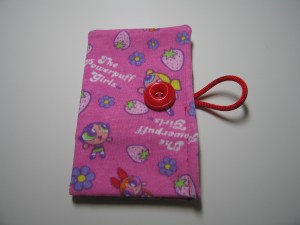
  9. Stuff with tea!

Next time, I think I’ll try a version with Velcro.  Because I have a lot of that too.  Oh, and the one my swap partner sent me was made with this very interesting cloth with galaxies all over it.  It was quite nice.  And she sent me the most fragrant jasmine green tea.

A few weeks ago, I decided to go through a trial run of crafts I was planning on doing with the kids (grades 3-6) in my church group.  I had never done them before, so I thought I’d test them out on the older kids (jr. high and high school) first.  Plus, we needed an activity for our Friday night time, and I didn’t have the energy or time (or motivation) to prepare something else.  So, enter these Creatology Makit & Bakit Suncatcher kits.

Basically, all you need to do is place the metal frame on a baking sheet, fill the spaces with the plastic beads included in the kit, and then bake at 375 degrees F for 15-25 minutes.  I didn’t think it was that hard.  But I heard so many complaints over the course of about 30 min while two jr. highers, a college student, and two other counselors (of sorts) were doing the craft.  I was going to make one too, but I ended up helping out with some wedding place cards that had to be finished up, so I couldn’t really attest to how it was going.  The suncatchers turned out ok, but there were some uneven portions and there were some random holes where the plastic didn’t melt into the area.

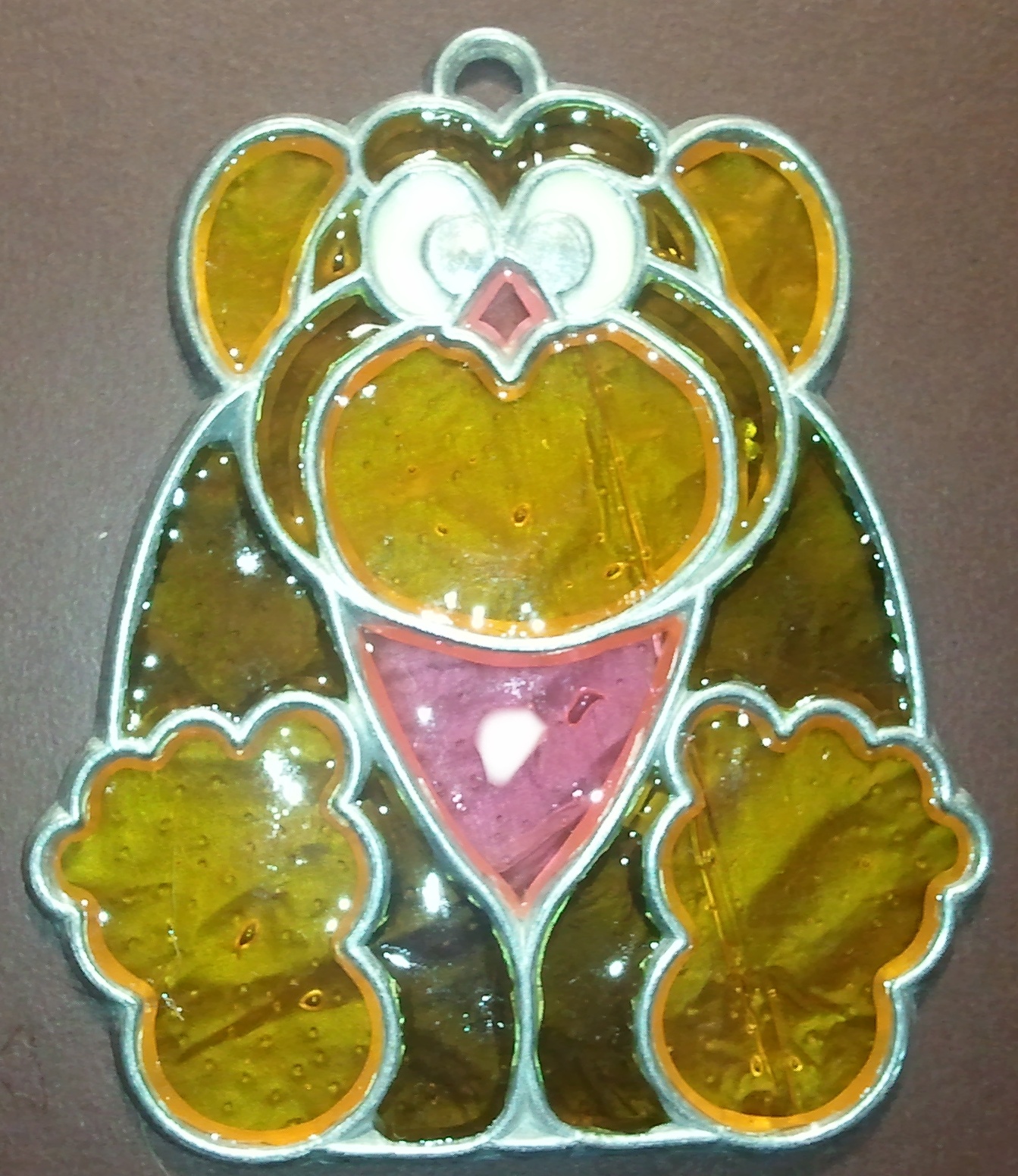
Based on their complaints and the results of the batch, I thought maybe it would not be a good activity for 3-6 graders.  But, just in case, I made one of the leftover ones myself (the ape you see above, if you didn’t figure it out already).

I put mine on a foil covered pie tin because I didn’t want to use a whole sheet pan for something that was only 3 inches tall.  I filled the empty spaces with beads, except for the hanger hole, and stuck it in the oven.

Not the best picture, sorry. It's hard to take pictures of things on foil with your phone.

First off, they tell you to pile the beads high in the center and even with the edge.  From the test results, I realized that if you didn’t have enough beads, the end product would have weird holes.  So I piled in the beads and hoped that they wouldn’t overflow as they melted.  Oh, and you see some colors that weren’t included in my kit because I had SO. MANY. BEADS. left over from the test batch so I just picked beads from my leftovers.

And here are my results.  You can see that there are some holes despite what I thought was a generous amount of beads, especially around the edges of the frame.  There was also a weird hole in the right foot.  So, they weren’t kidding.  You really need to pile in the beads.  The chest region came out nicely filled, but a bit lumpy.  The whole thing was rather lumpy.  The instructions in the back say that it should be a smooth, glass-like finish.  Well, it was definitely smooth, and I guess it would be glass-like if you were the worst glass-blower in history.  This was after 25 minutes in the oven too, the upper limit of their suggested baking time.

So lumpy! So hole-y!

To see what I could do to combat this, I decided to fill in the holes with more beads (tweezers were very useful for this) and I stuck it in the oven for almost another 25 minutes.  The results turned out much more to my liking.  There were fewer lumps from uneven melting and all the holes had been filled in.  And no, nothing caught on fire.

Less lumpy! Less hole-y! The line you see on the right side is from a crease in the foil.

So, I’ve decided that this would be a decent activity for younger kids, especially since you see that it’s advertised for kids 6 and older.  But, when you do them, be prepared to supply tweezers (my test group didn’t have any, which probably let to some of the complaints, but you can safely ignore the suggestion to provide straws or spoons) and be prepared to bake the suncatchers twice.  After the first time you’ll see where you didn’t have enough beads and you can fill in the holes.  Twenty-five minutes in the oven is too short, if you’re only going to bake them once, and nothing is harmed if you keep them in longer.  Just don’t forget them in the oven, obviously.

In the end, I didn’t use the suction cup they provided, and just strung my suncatcher on some invisible thread and strung it over my rear view mirror.  Huzzah!

Hang!