At long last, here was the post I was going to post back in summer but never finished doodling for it. Or, I had. But then I inexplicably deleted the file somehow. And then I was sad. And then I lacked the motivation to do anything about it. And then I started to do something about it. But then I lacked the motivation to anything more about it. I’ve been suffering an awful bout of ASD. I finally mustered enough to finish it now. So…yeah.
I was considering some idioms the other day. You know, as one does. One of them stood out to me though as being a bit ridiculous and nonsensical. Or rather, it wasn’t so much that it was nonsensical as it was…sensical. I present to you “head over heels.”
Um…you normally are oriented so that your head is over your heels. Notable exceptions would be when you’re in bed sleeping. Actually, your head could still be slightly elevated in relation to your heels because you’re probably using a pillow. I guess other exceptions would be doing any inverted poses (i.e. yoga, gymnastics, dance, diving). But really, how often are you doing that? You spend most of your life with your head over your heels. It’s a completely normal thing to do/be. So how did the idiom “head over heels” end up coming to describe something that’s NOT in their normal state?
Wiktionary gives the following examples for usage:
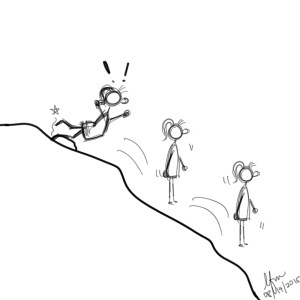
- She tripped and rolled head over heels down the hill.
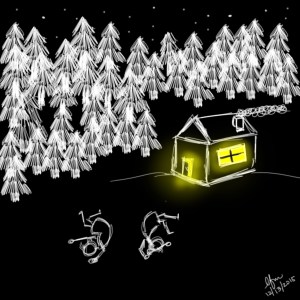
- Hearing the noise in the dark, the children ran head over heels back home.

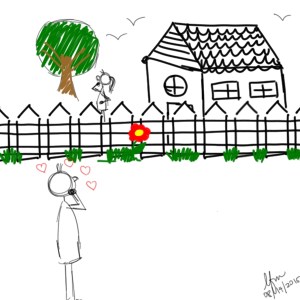
- He was head over heels in love with the girl next door.
All of these examples try to illustrate that things are not in their normal state. Taking a rather literal bent on and a florid description of the examples, you have:
- Someone who is literally falling and tumbling down a hill, rolling, so that her heels go over her head.

- Children who were sooooo scared by the noise in the dark that they ran so quickly that I guess their feet were faster than the rest of their body and their heels went over their heads. This is not a good way to run away from things, btw.
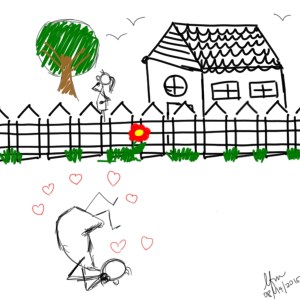
- Some guy who was sooooo in love with the girl next door that um…his heels were over his head? I know this idiom is actually most associated with being madly in love. It’s never made that much sense to me though. OH! Maybe he was so in love with the girl that he wasn’t watching where he was going because he was staring at the girl so he didn’t see the rock in his path as he was walking toward the girl and he tripped and thus his heels went over his head, which makes this example fairly similar to the first one and they are totally cheating and not putting enough effort into applying idioms. Also, sometimes I enjoy a good run on sentence.
ANYWAY…
A brief poking around on the internet tells me that the phrase originated in the 14th century as “heels over head,” which makes much more sense than “head over heels.” The literal meaning of the phrase gives you the impression that things are not as they are supposed to be. Actually, I think the literal meaning was used to describe doing cartwheels and the like, during which your heels would indeed go over your head. So why did it get inverted in modern usage? No idea. I didn’t bother doing much more research than what I just presented. Wiktionary seems to think it’s due to “phrasal elegance” though.
Other idioms I rather like:
- Killing two birds with one stone. Which my brother enjoys (purposely) saying as “killing two stones with one bird.” Just to be a butt and see how many people are paying attention. Because think about it, it’s pretty hard to kill a stone. It’s probably even harder to kill a stone with a bird. I don’t really know; I’ve never tried. But now you have to kill TWO stones with only one bird. Wow. That’s pretty impressive.
- Dotting your i’s and crossing your t’s. Which I like to (purposely) say as “dotting your t’s and crossing your i’s.” Also jusi io be a buii and see how many people are paytng aiieniton. And also because I ltke ihtnktng aboui how words would change tf you ltierally dtd whai I was saytng.
- Water off a duck’s back. Which I like to (purposely) say as “duck off a water’s back.” No reason for this one. I just like saying it that way.
Links to stuff:
http://www.phrases.org.uk/meanings/head-over-heels.html
 Random moosages as I see fit.