Skip navigation

I have had a huge craving for muffins recently.  I don’t really know why.  In particular, I wanted raspberry muffins, which is weird because I’ve never had raspberry muffins before.  I had a friend in Canada who would often get a raspberry muffin during his coffee break and would tell me about it.  But that’s about the only exposure I’ve had with raspberry muffins.  It did make me really jealous though.  The muffins he got sounded so delicious.  And there are no raspberry muffins to be found in CA for some reason.

Anyway, I’ve had some time off recently and I had been filling my time with YouTube videos on cooking because I wasn’t really in a position to do anything else that was productive.  During my marathoning of various YouTube videos, I found the Joy of Baking channel and on it, there is a recipe and demonstration for buttermilk berry muffins.  PERFECT.

I made these one Friday with the girls and instead of using mixed berries, I used up the raspberries I had in the freezer.  Unfortunately, I didn’t have any buttermilk on hand that day, so I used milk and lemon juice as a substitute.  They turned out pretty good, but missing the fragrance and flavor you get with buttermilk.  I had also cut down on the sugar the first time to about 120g.  I’ve decided it’s not necessary.  Her recipe isn’t sickly sweet to begin with and using the full amount of sugar she calls for is perfectly fine.

So I tried the recipe again, this time with buttermilk.  Actually, I ended up just getting a canister of powdered buttermilk because I’m tired of always going on last minute hunts for buttermilk when I need to use it in a recipe.  Now I have lots of buttermilk!  And it’s easy to use in baked goods!

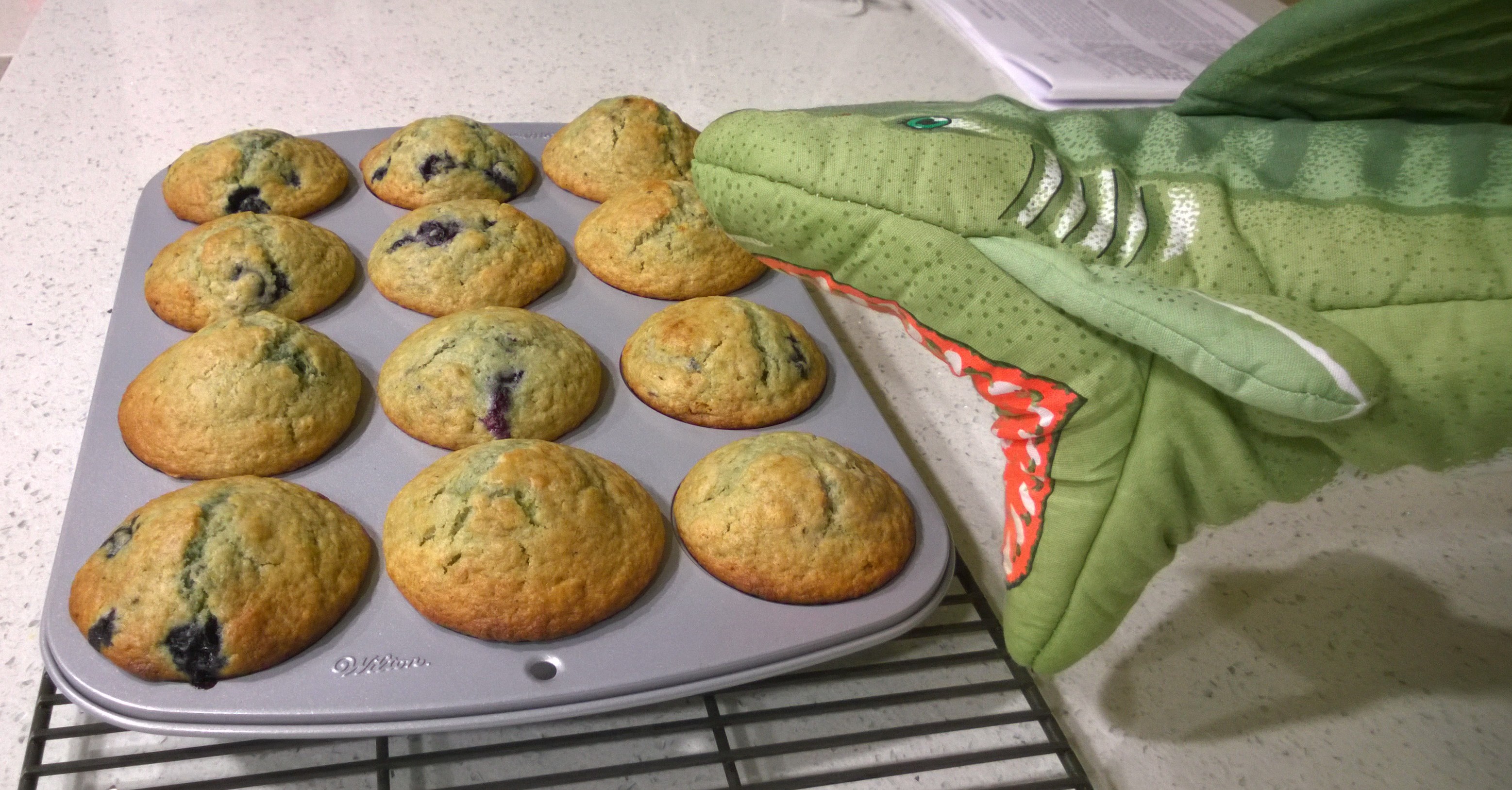
Anyway, the second time I tried it, I used up the blueberries in the freezer.  They baked up really nicely and they look so nice coming out of the oven and they smell so good (they taste good too, in case you’re wondering).  So good, that even sharks want muffins.
WP_20140602_21_42_52_Pro (1)

I have the best oven mitts, guys.

Let’s talk about mildew.  In particular, let’s talk about mildew as related to household items and cleaning.

Mildew is a superficial fungal growth on organic matter and also the resulting smell from said growth.  In a house, mildew can refer to many types of mold growth, but usually the mold has a flat growth habit.  These molds thrive in damp conditions or in areas with poor moisture control, e.g. a poorly ventilated bathroom.

Exposure to mold and mildew can cause various symptoms, such as nasal and sinus irritation, eye irritation, respiratory problems, skin irritation, and headaches.  It can be a trigger for asthma attacks in those suffering from asthma.

There are only three things are needed for a mold colony to establish itself: a food source, moisture, and time.

Time: mold can start growing within 24 hours from when growing conditions are met.

Moisture: mold needs moisture to help the decaying process caused by the mold.

Food source: This can be any organic matter.  Cellulose is common for indoor molds.  Besides the decorative indoor plants and fruits and vegetables in the refrigerator, there are plenty of cellulose-based products in a home.  Lots of building materials are plant-based and thus contain cellulose, e.g. wood, paper, drywall, carpet, carpet padding.  Lots of textiles are made of plant-based materials and thus contain cellulose: e.g. curtains, couch upholstery.

But mold does not feed only on cellulose; a colony can from where there is any organic matter, e.g. dead skin cells, soap, cotton.  And here’s the whole reason for this post on mildew.  Think about the last three items I listed, dead skin cells, soap, and cotton.  Now think about how you often wonder why your bath towels start stinking it up after you use them a couple of times.  Think of all the dead skin cells you’re leaving behind on the towels along with the water.  Think about just how much laundry detergent you put in your washing machine to try and get rid of the smell.  Think about how disappointed and confused you were when your towels almost immediately started smelling like mildew again.

STOP USING SO MUCH LAUNDRY DETERGENT.  Yes, you’re washing away the dead skin cells on the towels, but you’re replacing it with a bunch of soap, which is also organic matter, which is a food source for mold.  Your washing machine has a set time and amount of water it will use to rinse the load.  If you use a metric crap ton of detergent on your towels, how do you expect to rinse all of that away with limited water and time?  When you accidentally use too much soap washing your hands, don’t you have to rinse longer?  SAME.  PRINCIPLE.

Follow the recommended guidelines for your preferred brand of laundry detergent and you won’t have nearly the same issues with mildewy towels.

This has been a public service announcement brought to you by my pet peeve of people using too much laundry detergent.